
Practical Ways Your Family Can Serve Others This Christmas

“I will honor Christmas in my heart,
and try to keep it all the year.”

~Charles Dickens’ Ebenezer Scrooge in A Christmas Carol

One of my annual highlights is watching the film classic, A Christmas Carol. I love watching the transformation of Ebenezer Scrooge when the self-centered miser develops a servant’s heart. Granted, it takes a dramatic, catalytic experience late in life to get him there, but he becomes a changed man all the same. Every time I watch this film, I reflect on what more I could have done in the past year to help others. It’s a time of accountability, complete with a promise to do better in the year ahead.

I have special admiration for people who commit their lives to serving others.They’re not motivated by fame or fortune, but rather by joyful service.

I’m convinced our daughter Lauren was born with a servant’s heart. I first noticed this when she was four during a visit to a McDonald’s playground. She befriended a devastated little girl who had been deliberately abandoned by her big sister (Ronald would not have been happy!). The girl’s tears were soon replaced with joy for those ten brief minutes. While this example may seem ordinary, it is illustrative of the many times that Lauren has nurtured people who were socially excluded. Her empathetic heart has often been a blessing to others. Not surprisingly, she is considering a career in child psychology and counseling. I think she’ll be a natural.

The holiday season is a time when our thoughts often turn to practical ways we can serve those less fortunate. At a time when we are counting our own blessings, what are the ways we can include, encourage, or assist people in need?

This is not an exhaustive list, but here are some of our family’s ideas:
–       take a shift ringing a bell for the Salvation Army (we just did this last week; it’s a hoot, you meet great people, and it’s such a worthy cause)
–       volunteer at a local food bank
–       gather a group to sing carols at a retirement home
–       go out of your way to compliment those who are in service positions (including the Military)
–       send a note to a teacher expressing your gratitude
–       donate money to a local ministry that pays electric bills for the needy
–       adopt a family for gift giving
–       send a personal note to someone who lost a loved one in the past year

What do you and your family do to serve and bless others during the holiday season? Please share your ideas and stories with us; we’d love to hear your experiences!
10 Tips to Help You Master Your Time

Wow, where has the time gone? It seems like just yesterday when we toasted the new millennium, but here we are, about to ring in 2015. Sure, it’s a cliché phrase, but time really does fly by.

Time’s a funny thing, isn’t it? When we’re having a blast, it feels like someone is pushing the “fast forward” button. In contrast, if we have a two-point lead with three minutes left in the game, it feels like an eternity. When we’re suffering through a valley, we can’t wait for time to pass by.

Whether time flies or moves at glacial speed, we still have 24 hours in a day, seven days in a week, and no choice in the matter. We use it or lose it. And, because time is one of our most prized possessions, we need to use it wisely.

How can you become a good manager your of time?

Simply practice these tips:

  • Treat your time as a precious asset with limited capacity (this mindset is huge!)
  • Organize a to-do list by urgency (deadline) and priority (importance). Take both into account when deciding what to focus on each day.
  •  “Block” your time (i.e., group it in 30-60 minute intervals without interruption) in order to complete your highest priority assignments. Avoid interspersing lower priority tasks within your high priority assignment intervals. Take control!
  • Don’t hesitate to politely tell someone that it’s an inconvenient time for you. Interruptions can destroy your productivity if you allow it. Always saying “yes” is not necessarily a good thing!
  • Learn to multi-task your lower priority responsibilities. For example, I rarely watch television without doing something else like reading the newspaper or responding to emails.
  • Keep your cell phone somewhere else when you need focused time. The temptation to answer calls and texts is a major distraction. Smart phones can be our worst enemy if we aren’t careful.
  • Find your best venue for focused work. Is it your home office? A coffee shop? Your patio?
  • Take periodic breaks. Studies show we’re less productive when we work over an hour straight without a five-minute break. Breaks help our mind recharge.
  • Respect and honor the time of others by being punctual. You’d want them to respect your time, too.
  • Always remember that you can’t recover the time you waste!

The older we get, the quicker time flies by. Regardless of our stage in life, it’s never too late to improve your time management skills and resources. Becoming a wise time manager is an admirable New Year’s Resolution. Is it yours?

How productive are you with your time? Do you view it as a precious asset and focus on your most important priorities? What are some ways you have learned to become a more effective time manager?

Building a Rock-Solid Foundation for Our Teens: One Community’s Response

How do we set our teens on a pathway to their destiny—to help them fulfill their dreams and purpose?

It’s a fundamental question for their future—and our future—and the answer is multi-faceted. But, for now, I’d like to focus on one of the most vitally important prerequisites—a healthy and solid support system.

Research experts such as Dr. Chap Clark conclude that every adolescent needs at least five loving, trusted adults in his/her life to develop the emotional health, stability, and self confidence to succeed in adulthood. While other factors such as education, skills, and opportunities also matter, relationships with adult role models are key.

The reasons are many. Adults who have strong relationships with teens can offer love, friendship, support, affirmation, life wisdom, advice, and essential network connections. They’re tremendous assets to our children and invaluable third party voices for parents. Speaking personally, it’s been a major parenting priority for us, and our children have benefitted immeasurably from their relationships with many adult friends.

It’s great to see that some visionaries and communities are taking a proactive stance to connect our youth to caring, adult mentors. One such community is nearby University Place, Washington where community leaders of Project 5:1 recently brought speakers and resources to area parents, educators, mentors, service organizations, and the faith community at a weekend conference. Illustrating the broad-based support for this initiative, the conference was sponsored by numerous businesses; service, parent, mentor, and school organizations; non-profits; and churches. Feedback was overwhelmingly positive.

Local media supported the event as well, an indication of the compelling need for supporting our youth. As shown in the following news segment at King 5 TV in Seattle, I was honored to serve as a workshop leader on my topic, “Relationship Building Strategies to Help Teens Soar.” http://www.king5.com/story/news/local/2014/11/15/project-51-event-helps-parents-connect-with-teens/19110123/

In my talk, I shared four relationship keys with teens: 1) valuing their uniqueness, 2) affirming their worth, value, and potential, 3) communicating to build relationship capital, and 4) recruiting positive third party voices (the 5:1 concept being a perfect example). It was encouraging to see how many people are committed to building strong relationships with teens!

If you would like more information about the event, the movement, or my talk, please contact me via www.dennistrittin.com or check out www.projectfiveone.com.

In this season of gift giving, it’s hard to think of a more meaningful gift than an investment in the lives our children.

Celebrate the Season! Annual LifeSmart Book Sale!

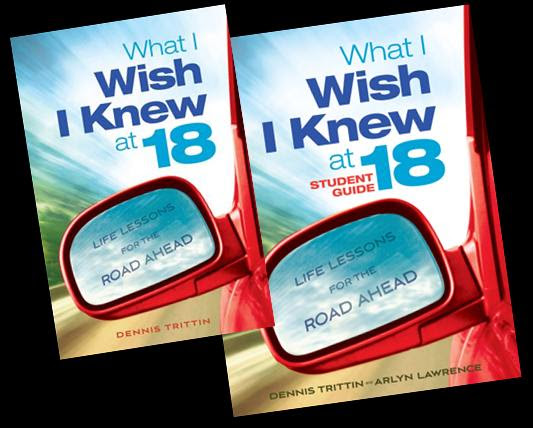
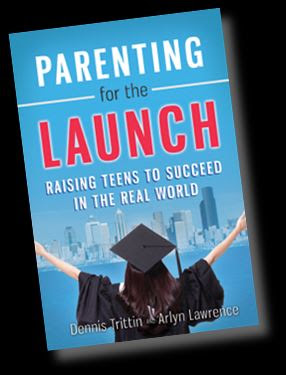
It’s been a great year at LifeSmart! We are filled with gratitude as What I Wish I Knew at 18 continues to impact the lives of young adults globally, and our newest book, Parenting for the Launch: Raising Teens to Succeed in the Real World, receives rave reviews for encouraging and equipping parents (click here for more information).

We think it’s time to CELEBRATE!
Our 4th annual Cybersale is offering Parenting for the Launch and ourWhat I Wish I Knew at 18 book and guides at substantial savings, just in time for holiday gift-giving and classroom orders for the New Year:
What I Wish I Knew at 18 BOOK – $14.99
What I Wish I Knew at 18 STANDARD STUDENT GUIDE – $14.99
What I Wish I Knew at 18 CHRISTIAN STUDENT GUIDE – $14.99
Parenting for the Launch – $14.99
(further bulk discounts available!)
now through Christmas
Order at AtlasBooks.com or 1-800-BOOKLOG
and use the Promo Code: CHEER
Parenting for the Launch serves as a wonderful gift for parents while What I Wish I Knew at 18 is a special keepsake gift or stocking stuffer for:
·teens and young adults
·parents and caregivers
·mentors and coaches
·teachers and faith leaders
·clients who are raising families
It’s our way of saying “Thanks!” for your support—and to wish you a joy-filled holiday season!
Blessings,
The LifeSmart Team.

How to Be an MVP Employee — A Lifesmart DVD

Are the young people under your supervision—children, students, or employees—prepared to soar in their eventual career? Not just to land the job, but to be a workplace MVP?
With high youth unemployment and all-consuming scholastics and activities driving their schedules and priorities, many of today’s young adults are entering the work force sorely lacking the skills and maturity they need to thrive in the real world.
We hear from employers all the time: “They may be book smart, but they’re certainly not life smart,” or, “They can write a resume and complete an application, but they lack the intrinsic qualities and life skills we need in our employees.” Many students understand how to succeed in the “front end” (resume and interview skills), but aren’t trained to succeed once they land the job.
At LifeSmart, we’re excited to announce our newest resource designed to help create future workplace superstars!
offers invaluable perspectives from employers and four road-tested strategies for succeeding in any career:
Selecting a career that plays to their natural strengths and interests
Modeling the qualities employers value
Delivering on-the-job excellence
Contributing to their employer’s success
This 45-minute live presentation at Appleton West High School includes illustrations, skits, training, and strategic insights to promote career readiness and workplace excellence. Viewers will gain practical wisdom about what separates those who soar from those who stagnate in their careers.
For $79, you can bring this valuable training into your own classroom or group. How to Be an MVP Employee will help prepare the young people in your life to reach their career heights and to succeed in the increasingly competitive landscape of today’s workplace.
For more information or to order, call (920) 319-3169 or email at dtrittin@dennistrittin.com.

Cyber Sale 2014!

There’s nothing like a gift that keeps giving. It’s one reason why we look forward to the holiday season when we offer our keepsake books at substantial savings. It’s our way of spreading a little cheer and saying “thank you” to our many friends.
So, here’s a “head’s up” that our 2014 cybersale is just around the corner!
For the teen and young adult in your life, there’s our acclaimed,What I Wish I Knew at 18: Life Lessons for the Road Ahead. This conversational book of life wisdom based on the practices of honorable and successful leaders builds the skills young people need and the marketplace demands. Its 109 life success pointers serve as a valuable third party voice for parents, a natural tool formentors, and a resource for leadership/life skills programs foreducators. Help encourage, equip, and empower the young people in your life with this gift of essential wisdom.
For parents and guardians, we offer our Parenting for the Launch: Raising Teens to Succeed in the Real World. Praised by parents, business leaders, educators, and mentors, this book is filled with compelling strategies to help cover the bases, build leadership and decision-making skills, create strong and enduring relationships, and position teens to thrive in adulthood. It offers powerful ideas to help parent with purpose and let go with confidence! And, it’s perfect for individual and group use.
We’re looking forward to serving you, your families, and organizations once again this holiday season. So, stay tuned!
Cheers,
The LifeSmart Team

Coaching 101: Critics Vs. Encouragers

How many coaches have you had in your lifetime?  5? 10? 20? However many, each was responsible for developing you in some subject or skill area. They helped grow your strengths and correct your weaknesses. When delivered in the right setting and in the right manner, their constructive criticism was a good thing, wasn’t it? It helped you be better, perform better, and know better.

There can be a dark side to criticism, though. It can be sharp, abrasive, and downright mean-spirited. This kind of advice comes off sounding like a slap in the face instead of an arm around the shoulders, and can deeply hurt people. People do it because they think it gets fast results, but they couldn’t be more misguided.

I’ve known people who are natural critics of everything in life, including themselves. It’s as though they thrive on negativity and find pleasure in correcting others or pointing out their weaknesses. They have a distorted view of reality and are often angry, bitter, insecure, mean-spirited, jealous, or all of the above. These types usually operate on the assumption that correcting flaws is the way to maximize results. They withhold praise. “Coaches” like this can be tough to handle.

There is another philosophy that operates from a completely different paradigm. It embodies inspiration, encouragement, and constructive feedback. Here, others are challenged to build on their strengths and correct their weaknesses through positive instruction and effort. Communication includes both positives and negatives, but the style embraces praise and encouragement over harsh criticism.

Let’s self-reflect for a moment.

  1. Which style works better for you when you’re on the receiving end of criticism?
  2. Which style do you employ when you’re on the delivering end of criticism?

I’m pretty confident we will all respond to the first question with “the second style.”  But, our answers are going to vary on the second. Are we humble and self-aware enough to be honest if the truthful answer is, “the first style?”

There’s a wise proverb that says, “The right word at the right time is like a custom-made piece of jewelry, and a wise friend’s timely reprimand is like a gold ring slipped on your finger.” Wouldn’t it be great to have that kind of impact in other people’s life? Not only that, wouldn’t it be more effective?

Throughout your life you’ll face countless situations where you give feedback to others. You may be a teacher or coach yourself (or become one, one day), or perhaps you manage an office or a team of employees. You might be asked for guidance from a friend who is going through a difficult time or a tough decision. Which coaching philosophy will you adopt? Remember, how you say it matters (http://dennistrittin.com/view_blog.aspx?blog_id=127) —a lot.

In order to bring out the best in others, the encouragement approach is far more effective. Not only is the feedback more balanced and accurate, but people put forth a more inspired effort to reach new heights when they work with someone who cares. Simply stated, people try harder to please someone they like and admire.

So, whenever you have the opportunity, be an encourager, not a critic—and always look for the best in people.

Consider the favorite teachers, coaches, and mentors in your life. What coaching style did they use? Which one comes more naturally to you? Do you actively seek opportunities to praise and encourage others?

6 Steps to Help You Become a Masterful Decision Maker

Decisions, decisions, decisions. Some days (like maybe during this month!) your biggest decision is no larger than what gift to choose for that hard-to-buy-for person on your Christmas list. Other days, it seems the weight of the world is bearing down on your shoulders and the impact of YOUR decision could be life changing—for you or for others.

Often, people make important decisions impulsively and based on emotion rather than on a thorough and objective evaluation. However, you needn’t be this way. Making tough decisions is never easy, but if you practice the following six decision steps, your odds of making the right one will be significantly greater:

Step 1: Get the facts.
Gather all of the facts you can, along with any accompanying assumptions. In some cases, you’ll have to use your best guess.

Step 2: Determine your key decision criteria.
Identify the key factors in making your decision, prioritizing your criteria from most to least important.  
 
Step 3: Identify all of your alternatives.
Consider all realistic options without prejudging. No choice is a “bad choice” at this stage.

Step 4: Engage wise counsel.
Solicit the views of experienced and insightful people who know you well and understand the decision at hand. (If you’re a person of faith, this is a good time to pray!)

Step 5: Conduct an objective pro/con analysis for each option.
Record the advantages and disadvantages and weigh them by importance. This is a particularly valuable step for visual learners since the right decision often emerges when the pros significantly outweigh the cons.

Step 6: Consider your “gut instinct” or intuition.
Chances are, by the time you’ve completed the fifth step, your best choice will have emerged. However, the final test is what your intuition is telling you. If, after completing steps 1-5, you have a nagging feeling that your preliminary choice isn’t right, sleep on it.

If you’re still uncertain the following day, have a heart to heart talk with yourself and your most trusted advisors. This will either reinforce your preliminary decision (which will provide the needed conviction) or it will compel you to more seriously consider your other alternatives.

When I look back on my own life, I can honestly say that I’ve never made a major decision that was personally wrong for me. I think this is one reason that I have very few regrets—and that’s something I’m forever thankful for!

How have you approached major life decisions up to this point: Are you diligent and methodical or are you more casual in your approach? How might the six-step approach identified here help you make wise decisions? Share your responses below; we’d love to hear from you!

What Do YOU Uniquely Have to Offer the World?

With Thanksgiving right around the corner, I’ve been reflecting on how thankful I am—not for what I have for myself, but for what I have to give away. Really, life’s greatest joys come not from the getting, but from the giving. Don’t you agree?

I have special admiration for people who commit their lives to serving others. They’re not motivated by fame or fortune or power or things, but rather by joyful service. Their qualities of generosity, empathy, compassion, and kindness seem to come naturally to them, and they’re inspiring treasures to us all.

How you impact the world will be driven by what you have to offer and what you choose to offer. Well then, what do you uniquely have to offer the world?

“What do I have to offer the world?” It’s a profound question, and one that will continually evolve throughout your lifetime. At any point, though, your assets will generally fall into three categories: your time, your talent, and your treasure.

There are many different avenues that allow you to allocate these resources to serve others. To decide how best to give what you have to benefit others, there are three main questions to consider:

  • What talents and skills do I have to offer?
  • What groups or community segments (e.g., youth, elderly, homeless) do I feel most called to help?
  • What organizations will allow me to use my talents to help those I feel most passionately about?

Then, it becomes a matter of deciding which of your assets to offer to have the greatest potential impact in each situation. Your time, talent, and treasure offer you tremendous opportunities to give the gift of yourself.

Living life with the heart of a giver will bring help and hope to others and immense joy to you in return. You’ll receive far more than what you give. Nothing compares with using your gifts and talents to improve the world around you. This is the true spirit of Thanksgiving!

Have you experienced the deep thankfulness that “giving yourself away” brings about?  Looking ahead, what new ways do you envision using your time, talent, and treasure to make the world a better place?

4 Tips for Handling Adversity

In the popular kids’ book Alexander and the Terrible, Horrible, No Good, Very Bad Day, the small protagonist starts out mournfully, 
“I went to sleep with gum in my mouth and now there’s gum in my hair. When I got out of bed I tripped on the skateboard and by mistake I dropped my sweater in the sink while the water was running. And I could tell it was going to be a Terrible, Horrible, No Good, Very Bad Day.”

Ever had a day like Alexander’s? Or even a Terrible, Horrible, No Good, Very Bad WEEK?  Month? Year?

Adversity, unfortunately is a fact of life, whether it’s as small as waking up with gum in our hair or as big as experiencing a major health issue, discouraging career setback, or the loss of a loved one. When facing our toughest times, we simply don’t know how deep the pain will be or how long it’ll take to recover. For many, this kind of uncertainty can lead to hopelessness and even depression.

It’s important to remember that every trial has a different recovery path—some admittedly longer than others—but you WILL recover. That’s why in hard times, it’s essential to maintain a sense of hope. After all, some of our greatest triumphs will come following a pe riod of despair. We just don’t know it at the time!

When we’re in an emotional valley, it helps to remember that it won’t always be this painful, and that one day we we’ll experience joy again. Thankfully, time has  a way of healing and getting us through our toughest challenges. We may even come to realize that our adversity prepared us for something greater or was even for our own good!

Regardless of the adversity you experience, it’s critical to remain hopeful and connected to your support system. This may mean reaching out to others for hel p rather than relying solely on yourself (tough for us independent types!). After all, that’s what friends are for, and you would do the same for them!

Finally, if you’re really struggling with a tough time, consider “projecting” your situation onto a friend by imagining that he (or she) is experiencing what you are. What objective advice would you give if him or her? Then, listen to your own advice! It may sound a littl e strange, but it works!

Bottom line: When hard times come, keep going, keep looking up, and keep moving forward.  It’s an ancient and proven truth that day follows night and “joy comes in the morning!”

During times of trial have you found ways to engage the principle that
 
“Day follows night… and joy comes in the morning?”
 
We’d love to hear your stories and suggestions!