
Leadership for a Lifetime: Positivity

It’s been said you will become the average of the three to five people with whom you spend the most time. Can you see it?  Positive, motivated people challenge and inspire us to be our best.  Negative, unmotivated people can drag us down and reinforce a mindset of mediocrity.

Great leaders surround themselves with positive influences and steer clear of the negative ones. This principle is not only true for relationships; it applies to any influence we take in, such as music, TV, movies, Internet, etc. We become the sum of our input—which is why positivity should be the reigning theme of what we expose ourselves to.

There are few places in the life of a young person where this plays out more importantly than the relationship choices they make after high school, when they leave their comfortable well-known environment for a new one (e.g., college, tech. school, military, gap year). It’s arguably their biggest test.

In the transition from high school to college, for example, they will go from “big fish in small pond” to “small fish in big pond” where no one (including the professors) knows them. They’ll be in a sea of strangers. This is one of the biggest reasons why many people never take the plunge to move from the comfort and security of home/hometown.  Yes, it’s intimidating. Yes, it’s worth it!

When I (Arlyn) was a young adult, I lived overseas for a few years when my husband and I were newlyweds and he was in the military. This was before the Internet and inexpensive phone services were available. I could afford to talk to my parents and friends only briefly and infrequently. I lived in a community where I couldn’t speak the language or even read the street signs!

There were other young adults in my situation, and a number of them responded with negativity and victimization—poor me—and surrounded themselves with others who felt the same. Obviously, their overseas experience was very different than mine. I took university classes, worked at a local school teaching English, volunteered, learned to speak the language, and got to know my neighbors (even though we barely understood each other!).


The results? Those who chose negativity were either miserable or short-lived in their overseas experience, while I had a blast. What made the difference? I believe it was the power of positivity.

Loneliness can be one of the biggest de-railers post-high school (after one’s support system is distant and scattered), and can cause depression or compel a person to rush into unhealthy social situations. When this happens, we need to be patient and remember that it took a while to make the great friends we already have. After all, true love and friendship take time and timing!

Here’s how to apply the principle of “positivity” to new situations:

Tip #1: Find people who share your values and interests. (It pays to make a list of your non-negotiable values in a friend before you enter your new environment.) Join a group, club, or team (make a big place small). Proactively seek out a small community where you’ll feel at home.

Tip #2: Steer clear of destructive/complaining/melancholy/unmotivated people, as well as those who don’t respect your values. Recognize not everyone is meant to be your friend. When you do have someone like this in your life, it’s not your job to cheer them up, make them happy, or provide positivity for them (this can lead to a dysfunctional, co-dependent relationship).

Do you know any young people in this position—or getting ready to be? Maybe they are high school seniors getting ready to “launch,” new college students, or others who have moved away to take their first job in another city. Maybe they’ve joined the military and are in their first duty station away from home.

Whatever the case, encourage them not to get sidetracked by loneliness—and to choose the power of positivity. It pays to choose wisely!

Leadership for a Lifetime: Self-Awareness

When you look at yourself in the mirror, whom do you see? Is the image clear or blurry? Do you like what you see or wish you could have a makeover? Are you a kitten who sees a lion or a lion who sees a kitten?

Unfortunately, most of us lack a complete and accurate understanding of ourselves because our perception is distorted through our own biased lens. Each one of us is filled with valuable treasure, but for many it lies buried beneath the surface, waiting to be revealed. I daresay this is true for most adults, but it’s especially so with adolescents. Unfortunately, they’re making fundamental, life-changing decisions without truly understanding themselves.  We call this essential leadership quality self-awareness.

When it comes right down to it, teens and young adults are trying to answer these fundamental questions at this stage of life: 1) who am? 2) what do I have to offer? and 3) what are my opportunities? The first two get at the heart of their identity… their value proposition to the world. It’s vital that they get these answers right because they will heavily shape their future.

Within each and every person, there is a treasure of talent, qualities, assets, and skills. How would you like to mine that treasure in you? How about the treasure in your students, children, and others around you? How can you develop a clearer understanding of yourself and the tremendous value you have to offer—and help others do the same?

Here’s one way: Knowing that self awareness comes through self discovery and affirmation from others, we’ve developed a personal leadership assignment you can access here. It not only helps you assess your own unique assets/strengths, but it also captures the invaluable perspectives of others who know you well and have your best interests at heart. As you complete this project, you’ll have a much more complete and accurate perspective of…You!

Briefly, your assets fall into several categories:

  • Foundational Assets:
    • Physical: strength, speed, agility, dexterity
    • Mental: intelligence, reasoning, creativity, subject specific
    • Behavioral: personality, attitude, emotional intelligence
    • Spiritual: faith, values, inspirational experiences
  • Relational Assets:
    • Support System: companionship, security, love from others
    • Network: pool of personal and professional ambassadors
  • Aspirational Assets:
    • Experiential: credentials, life skills, service, leadership
    • Interests: knowledge pursuits, recreational, leisure
    • Passions and Dreams: desires, causes, purpose, impact

The power of gaining input from others as you inventory your strengths cannot be overstated. They will call out perspectives you either never realized or never fully appreciated. Remember the later scene in “The Wizard of Oz” when the Wizard honored the Scarecrow with a degree, the Tin Man with a heart, and the Cowardly Lion with a badge of courage? Each of them always had smarts, kindness, and courage, but it took someone else to reveal it for them to believe it!

Great leaders are self aware and lead from their strengths. They have an intuitive grasp of their uniqueness and value and how to offer it to others. Then they align their lives accordingly.

So, what are your greatest strengths? A commitment to self awareness will help you identify and develop them—and use them in a way that brings joy to you and is a benefit to the world!

Leadership for a Lifetime: Intentionality

“The quality of your commitments will determine the course of your life.” – Ralph Marston

Everyone has a dream—or at least, they should! The question is, will that dream become a reality? Success doesn’t come easily and dreams don’t automatically come true. It takes hard work and proactivity.

What makes the difference between a dreamer and an achiever? One key attribute is a leadership quality we call intentionality. Here’s what it looks like:

  • Being active versus passive
  • Setting goals
  • Staying focused
  • Managing our time wisely
  • Demonstrating self-discipline

People who live intentionally are self-aware. They know what they want to accomplish and are mindful of anything that might interfere. They take responsibility for their mental, emotional, physical, and spiritual well-being.  They consistently take action to ensure their lives are purposeful and on track.

One thing I (Arlyn) have noticed about intentional people is that they “act on” their circumstances rather than allowing their circumstances to act upon them.  They don’t just drift through life; they approach it pro-actively. They initiate, rather than simply respond.

For young adults, especially those whose decisions have been mostly made for them by authority figures, becoming intentional is a paradigm shift. They need to think of themselves as the responsible party for their life; i.e., by moving into the driver’s seat from the passenger’s seat. Depending on their upbringing, it’s not always easy.

As educators, parents, and mentors, we can help young adults understand that every day of our life is filled with choices, and WE are responsible for how we approach those decisions: Will you try something new or stick with the status quo? Will you follow through on yesterday’s decisions or get distracted by today’s new ideas? Will you associate with people who inspire and encourage you, or who negatively influence you and drag you down? Every decision either puts us one step closer to our dreams, or moves us a step away.

Intentional people are goal oriented and chart a course straight for it. They aren’t swayed by naysayers or distractions.  They find a passion bigger than themselves and take the practical actions necessary on a daily basis to accomplish it. They don’t just have a vision, they pursue their vision relentlessly!

Encourage the young adults in your life to live with vision and intentionality.  Ask them, “What’s your vision? How are you charting a course to accomplish it? Are you intentionally making decisions that will keep you focused and on track?”

And while you’re at it, ask yourself the same questions!  We can all improve our commitment to living with intentionality. The best way to start is to write down your vision, and then set near- and longer-term goals to fulfill it. Manage your time according to your priorities. Stay focused and don’t let distractions sidetrack you.

We live in a tech-y world dominated by constant connectivity and stimulation. Can we discipline ourselves to use technology for our good, and not let it dominate our life, thoughts, and time? Intentional people control technology rather than the other way around.

Finally, intentional people learn from observing other intentional people. So, look around you. Who out there is living the kind of life you want to live, or shares your purpose and vision? Ask them to share their wisdom and experiences and any practical principles that can help you achieve your goals. Why reinvent the wheel?  Besides, the journey is always easier—and more fun—when (intentionally) shared with others!

Leadership for a Lifetime: Vision

If you don’t know where you are going, you will probably end up somewhere else.

~Lawrence J. Peter

For those of us who grew up in the Sixties, July 20, 1969 will go down as the most inspirational day of our lives. We gathered around our TV sets in wonder as Neil Armstrong spoke these immortal words, “That’s one small step for man, one giant leap for mankind.” Our nation was brimming with pride.

A mere eight years earlier, America’s new and charismatic president had a vision. As far-fetched as it seemed at the time, JFK challenged Congress to support an initiative to put a man on the moon (safely returned) by the end of the decade. Amid a pool of skeptics, the vision was cast and NASA would successfully achieve this unimaginable mission with months to spare. It was one of the greatest moments in world history.

Question: would this have played out as it did if JFK hadn’t offered his bold vision? Not a chance. It illustrates so well why history’s greatest achievements and admired people are guided by an inspiring vision or purpose.

We might not be in the same league as JFK, Lincoln, Jobs, Disney, Edison, Franklin, Columbus, Mandela, MLK, Gates, Graham, or Mother Teresa, but in our own ways, we can all live with vision, too.  And when it comes to training our younger generation, it’s one of the most important leadership lessons of all.

During the high school and college years, a young person’s focus is clearly on the next step and specifically, on their eventual careers. While this is understandable, it can be argued that a more holistic approach to vision casting is essential. After all, a career is only one aspect of our lives and many if not most people change careers several times.

Is vision just one of those things that you either have it or you don’t? Not necessarily. Environment, training, and role modeling can have a huge impact on a young person’s inclination or ability to live with vision. Here are some suggested topics for parents, educators, and mentors to cultivate vision-mindedness in the young people we’re influencing:

The Big Picture:

  • What difference would you like to make in this world? Describe your dreams.
  • How would you like to be remembered? (The eulogy/tombstone ideas might be a little morbid!)
  • What does “success” mean to you?
  • Whose lives inspire you the most?
  • How can your passions and interests intersect to have the greatest impact?

College:

  • How will you define “success” in your college years?
  • What will you like to have accomplished in terms of academics, career, credentials, experiences, skills, relationships, and personal growth?

Career:

  • Knowing that the career decision needs to be one of the most well-researched in life, describe your 1) interests and passions, 2) natural skills and strengths, 3) personal preferences (on the job and in the working environment), and 4) ability and willingness to fulfill training requirements.
  • What perspectives can help determine that the careers you’re considering would be a great match for your skills and interests?

Service:

  • Reflecting on your passions and talents, what are some ways you can serve humanity?
  • What problems, community needs, and people groups do you feel most drawn toward?
  • When have you felt most fulfilled when helping others?

Family:

  • What are your hopes and dreams when it comes to family?
  • What do you consider the most important elements of a strong, healthy, and purposeful marriage and family?
  • What qualities will you be seeking in a lifelong partner?

Personal Growth:

  • Knowing that great leaders play to their strengths, what are your greatest assets and areas for improvement/growth? (A recommended resource for discovering your assets is this personal balance sheet assignment.)
  • Who do you admire most and why?
  • What are the traits of the person you wish to become?

As the young people in your life develop answers (and some guesses!) to these questions, it’s important to emphasize that our vision evolves over time…few are cast in stone. The key is cultivating a visionary mindset that reflects their entire life and recognizing that each vision is uniquely valuable. No one’s vision is their vision and no one can impact this world like they can.

Great leaders live with vision.

New Blog Series: Leadership for a Lifetime

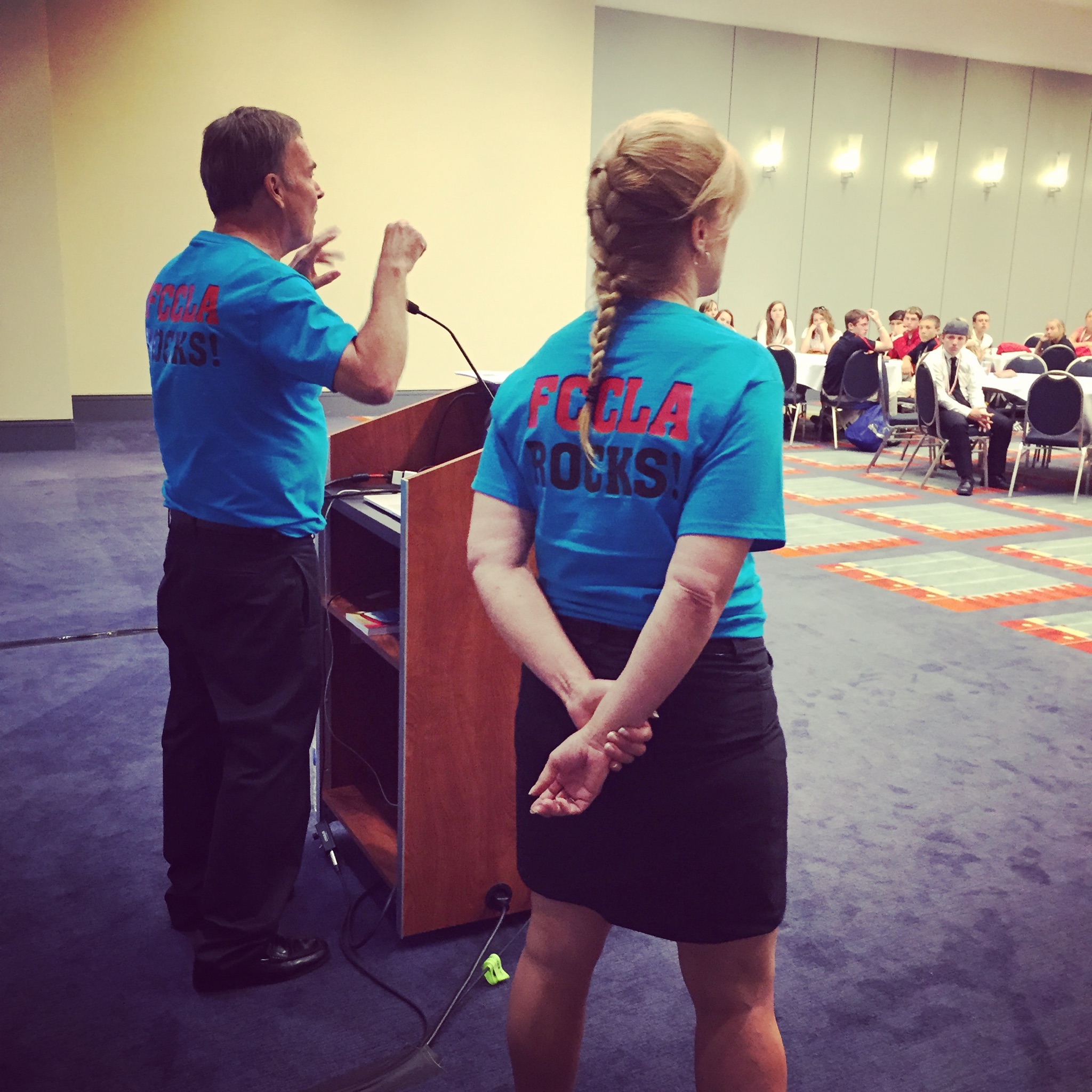
"Leadership for a Lifetime" talk to high schools seniors, at FCCLA National Conference in Washington, DC, July 2015, with Dennis Trittin and Arlyn Lawrence

“Leadership for a Lifetime” talk to high school seniors at FCCLA National Conference in Washington, DC, July 2015, with Dennis Trittin and Arlyn Lawrence

Where will they go from here?

It’s a question every parent, educator, and mentor has likely pondered as the children under their guidance prepare for their launch into the real world. They’ve offered love, security, wisdom, and training and have left indelible marks on these young adults. They’ve contributed to their leadership foundation, and soon the strength of that foundation will be put to the test in the game called “life on your own.” Many, if not most, of these young people will be landing in a new environment, awestruck like Dorothy when she entered the land of Oz.

As authors of What I Wish I Knew at 18 leadership/life skills resources, we are honored to prepare tomorrow’s leaders with the wisdom and strategies they need to successfully transition into adulthood. Through our contacts and speaking engagements, we’ve partnered with many people and organizations who are deeply committed to training up the next generation. One of our favorites is FCCLA—Family, Career and Community Leaders of America.

FCCLA is a national Career and Technical Student Organization that promotes personal growth and leadership development through Family and Consumer Sciences education. In the past four years, we’ve participated in their national conferences as exhibitors and speakers and always leave inspired by the well-rounded leaders they are building. We wish every student at every school could participate in their programs!

At this year’s FCCLA national conference in Washington D.C., we received a special invitation to speak to high school seniors who will soon begin their adult futures. We delivered our talk, “Leadership for a Lifetime,” to a packed house of motivated students ready to take on the world! We shared nine essential leadership themes that will serve them well in the near future and throughout their lives.

Inspired by their feedback, we decided to share these leadership concepts in a nine-part series beginning next week. It’s our hope that this blog series will serve you as parent, teacher, mentor, or student, and that you’ll spread the word to others in your personal and professional spheres. We’re all in this together!

Our leadership theme for next week: VISION. Catch you then!


Parenting Teens: When Things Get Rocky

Every relationship goes through its ups and downs. For parents, the teen years provide more opportunities for conflict and stress within your household. Teenagers are processing a lot (they’re changing physically and emotionally, discovering their passions and goals, planning their future, etc.), while parents are trying to transition from control to influence. Often, a certain tension permeates the air as launch time approaches.

As our children transition toward adulthood, changing our filter from instructing to empowering should happen incrementally. We increasingly assume the role of influencer and encourager, rather than director, so our relationship and communication should adapt accordingly. Because our children and our roles are undergoing such significant transitions, it’s important to keep in mind our key relational and communication goals, especially during times of conflict! With these goals in mind, we can help keep the “fireworks” at bay and ease some of the tension that may be rising.

Here are some important musts to keep in mind:

  • Respect their desire for increasing independence and empower them to assume greater responsibility
  • Strive to build an enduring relationship based on mutual trust, respect, and understanding. We must be viewed as a safe place for them to share their dreams, hurts, challenges, and disagreements. Replace “talk to” with “share with” in your filter.
  • Promote self-discovery and responsible decision-making, even if it comes with risk. Mistakes are a necessary part of the growth process.
  • Regularly model unconditional love, even when we don’t always agree

As we seek to empower rather than control our children, certain words should govern our behavior and occupy our communication filter any time we talk with them: influence, ask, listen, invite, respect, understand, encourage, share, and inspire. These are especially helpful to keep in mind when strains and conflicts rise and when our children are making difficult decisions.

Here are some key things for all of us to remember during times of disagreement and correction:

  • Respect their point of view (even if you disagree); strive for mutual understanding
  • Strategically time your difficult conversations when all parties are calm
  • Avoid nagging, irritating, and frustrating them
  • Share your views in love. Do not be harsh or critical.
  • Keep your cool and resist the urge to fight with them
  • End with a touch, hug, and expression of love

These strategies can help take some of the sting out of your difficult conversations and help your teen understand that you are trying to empower them, not control them. While having strong communication goals are important for parenting children of any age, they’re absolutely essential when raising teens and young adults.

Consider whether your communication methods influence and empower, or direct and constrain. When tensions rise in your house, how do you handle it? Do you have any great communication strategies to share? Remember, we’re releasing eagles to soar, not kites to control!

A Secret Ingredient for Career (and Life) Success

“Nothing great was ever achieved without enthusiasm.”

Ralph Waldo Emerson


What does it take to land a great job, make wonderful friends, open doors in your career field, or land lucrative accounts for your employer? When you think of the qualities that might help you get ahead, the first things that usually come to mind are intelligence, experience, reputation, connections, and maybe even luck.. But here’s the deal…when it comes to soaring in your career (and in your life!), the secret sauce is enthusiasm!.

Enthusiasm may seem like a “lower order” attribute compared with these other credentials.. However, many times a job candidate’s  enthusiasm is precisely the deal breaker in choosing one of two equally qualified applicants, or what sways a potential client to selecting their supplier. Everyone wants to work with someone who is excited to be there!

I believe that enthusiasm is a secret ingredient for accomplishing great things. During my investment career, I gave countless presentations to multi-billion dollar sales prospects. After careful observation and coaching from our company’s best marketers, I developed quite a reputation for telling our story. I was told it was my enthusiasm that set me apart from my peers. I passionately believed in our company and its services, and I made sure our prospects could tell! Ultimately, it made a significant difference to our sales success. It was a critical element in my job interviews, too.

People who exude positive energy and enthusiasm are infectious. They inspire others with their spirit and obvious love of life. They motivate everyone around them to do and believe the best, and it’s a key ingredient they pass on to employees.

How can you demonstrate your enthusiasm on the job? Here’s a sample:

  • in a job interview, know the company and position like the back of your hand and demonstrate your interest with compelling questions, high energy, and full engagement. Don’t let anyone be more enthusiastic than you!
  • always discuss work-related issues in a positive and upbeat way and be solution minded. Whining doesn’t exist in your vocabulary!
  • show up on time—early, even!
  • demonstrate great listening skills, seek constructive feedback to improve, and stretch yourself
  • approach customers proactively and focus on exceeding their expectations
  • seek out extra tasks and projects when there is down time
  • suggest new ways to improve sales, reduce costs, develop new products/processes, and add value to clients
  • understand how your supervisor is being evaluated and contribute to his/her success
  • seek opportunities to mentor and encourage others

Whether it’s simply enjoying the company of others or interviewing for the most significant career opportunity of your life, show your enthusiasm. It WILL make a difference!

How differently do you feel around people who are positive and enthusiastic versus those who are low energy or negative? Have you made a point to be enthusiastic at your workplace or in school? If so, has it helped your success? 

The Media and Your Teen: What is the Entertainment Culture Telling Them?

ID-10081618Has this happened to you? You tell your teenager something a hundred times over and get nowhere. Then someone slightly cooler comes along, says the same thing, and gets an instant response.  Don’t worry. You didn’t do anything wrong. It’s a normal phenomenon!

As the teen years progress, most moms and dads notice their teens pulling away and gravitating more to peers and other “voices” in their life. As their parent, it pays to get to know who those other voices are—both the good and potentially not-so-good. It will prepare you to understand, support, and let go at the right times with confidence (and to reel them in a bit when necessary). Some “voices” you’ll want to be paying attention to are:

  •             Other adults
  •             Friends
  •             Your home
  •             Their inner voice (conscience)
  •             The media/internet/entertainment industries

There is a host of voices competing for our teens’ attention and not all of them are human. The media, entertainment industry, and the internet are great examples. What are these all saying to your teen? And just how powerful a voice are they in shaping their values and behaviors? The answer is extremely.

The average American teen:

  • watches approximately three hours of television a day
  • views TV an average of 17 hours per week and listens to several hours of music per day
  • spends more than 38 hours per week using media in general (TV, videos, computers, tablets, smartphones, and video games)
  • uses the internet an average of two hours for four days per week
  • has watched 15,000 hours of TV by the time he/she graduates from high school, compared to 12,000 hours spent in the classroom.

Our kids belong to the most technologically connected generation ever. Today’s teenagers are watching more video on mobile devices (computers, laptops, tablets, smartphones, etc.) and less on the traditional TV. Online, they shop, post and view photos, read messages and articles, chat, play games, and glean all kinds of information about the world and life in general. This dramatically affects our kids. Every day they are receiving hundreds of messages about what is true (or not), what is important (or not) and what is cool (or not). The values they absorb from these voices can have a huge impact on their later success in life. Take sexuality, just for example.

Typical teen media consists of heavy doses of sexual content. Sex is often presented as a casual, recreational activity without risk or consequences. Don’t think this doesn’t affect our kids’ values and choices! It has tremendous potential to distort their sense of reality. If kids see a behavior on TV and in movies often enough (or hear about it in song lyrics), they can start to think it’s not a “big deal,” even if personal or family values urge otherwise. Peers can reinforce this.

So, guess what listening to these particular “voices” produces: earlier and earlier sexual activity.[i]Teens who said they listened to music containing overt sexual messages were found twice as likely to become sexually active within the following two years. Not cool.

Regardless of what parents tell them is right, safe, or wise, media content is often a loud voice encouraging teens to act contrary to their (and their family’s) established values. Does this mean we shut it all off and take away the tablets, computers, TV, and iPods? No. It does mean we should make an effort to know these voices in our child’s life, just like we want to know what the other voices in their lives are saying to them—their teachers, coaches, and peers. A parent’s role is not simply that of a police officer (especially the further you get into the teen years); it’s moderator, counselor, and guide.

Your child’s use of media, internet, and entertainment can provide you with a great opportunity to initiate conversations about values, discernment, and choices. Be aware of what your child listens to and watches.  Create safe venues to discuss your respective thoughts, feelings, and values related to the content. Make sure they have positive growing relationships with other adults that will tell them the same things you would. Don’t let the negative voices of culture do all of the talking, particularly on potentially life-altering subjects.

Are you aware of the messages your teen is receiving from the media? What have you done to combat the negative voices your teen is receiving that may contradict your family’s values? Do you have TV and/or internet use rules in your home?

Photo: Freedigitalphotos.com, by stockimages

4 Aspects of Miscommunication and How to Avoid It

ID-100342634I wish I had a nickel for every time I’ve said, “I didn’t mean it like that!” Or, a nickel for every time someone said it to me. I’d be a very wealthy man! The sad fact is, the messages we send can often be received differently than we intend. And, when it happens, it can be a disaster.  With college and careers starting for many this time of year, it’s important they’re aware of how they’re coming across and the impact of how we say things They’ll be making scores of first impressions and beginning new relationships of all sorts.

Despite our best efforts, miscommunication happens to the best of us. Sometimes we’re the deliverer and other times we’re the receiver. Fortunately, there are some simple things you can do to minimize it, especially as you embark on a new stage in your life and meet new people.

Four things affect how others receive our messages…and any one of them can be the cause of major misunderstandings if we’re not careful:

  1. Word choice – This factor is huge, especially when we discuss sensitive topics and issues we are passionate or emotional about. In these situations, our emotions can interfere with our thinking, and we often use more provocative language that we later regret. In the “heat of moment,” we can be so focused on proving our point or describing how we really feel that we forget to show tact, empathy, and understanding to our audience. Inevitably it leads to hurt, mistrust, frustration, verbal attacks, or shutting down. We’ve all experienced this.
  2. Delivery – Sometimes it’s our manner of delivery that gets in the way, even if our word choice is fine. Delivery is especially important when meeting people for the first time. Examples include speaking with a harsh (or bored, unenthusiastic, or condescending) tone of voice or displaying certain expressions and body language that are not received well by others (crossing arms, standing over someone, frowning, smirking). No matter what words we use, if the “packaging” is incongruent, our message will lack credibility and rub people the wrong way.
  1. Form – Ever wanted to type a nasty email when you’re irritated, or send a harsh text when you’re upset? Trust me, that never ends well. The advantage of verbal communication is that the audience hears you speak, allowing your tone to help convey your ideas. In contrast, written communications (e-mails, social media messages, text messages, etc.) have a major disadvantage because the audience imposes their own interpretation of your tone when they read it. Their perception may be light years away from what you intended. If so, you have a big problem on your hands that might be very hard to undo!
  1. Filter – Depending on whether your audience likes or distrusts you, whether they’re in a good or bad mood, or either focused or distracted by other thoughts, your message may not get through in the way you intended. Unfortunately, this happens all the time (especially with written communications), and you can’t control it.

In short, here are a few quick tips to make sure you avoid miscommunication with others:

  • Be sure your expression (body language, tone, and facial expressions) are in sync
  • Think before you speak, especially if you’re in an emotional state or commenting on potentially charged topics. Avoid provocative words and sleep on any written communications before sending when addressing sensitive topics.
  • Strive to be empathetic by putting yourself in the audience’s position with a goal of mutual understanding. You may agree to disagree, but that’s okay.
  • Closely monitor the receiver’s body language to see whether he or she may be interpreting your words differently than you intend. Their eyes won’t lie!
  • Be a discerning listener when they respond
  • Be quick to apologize for any misunderstandings

Do you pay close attention to how you communicate and how your words are being received? When meeting new people, how do you make a good first impression and avoid miscommunication? What are some ways you’ve learned to be a more effective communicator?


Image: freedigitalphotos.net, by nenetus

10 Ways You Can Become a Lifelong Learner

Education is not the filling of a pail, but the lighting of a fire. -William Butler Yeats

Summer…. Don’t we all love it? Enjoying  the days in the sunshine, drinking lemonade on the back deck,  spending more time with family, and kids (and college students) getting a chance to relax before school starts again. I am not sure who loves summer more—kids, or teachers!

But, one thing I’ve learned over the course of my lifetime is that summer vacation isn’t an excuse for learning to go out the window. The same is true for us adults, who are well advanced in our careers.  Whether it’s exploring new topics or taking a deeper dive into subjects we already know, life-long learning is a pursuit that will serve kids—and adults—for the rest of their lives.

What are ways we can explore other subject areas, challenge our minds, and grow even stronger in areas that we enjoy?

I grew up living the simple life in small-town Wisconsin. It was a childhood I wouldn’t trade for anything in the world. I spent most of my free time either playing sports or hanging out in the woods with my friends. But, while that got me through high school and college just fine, I began to notice something early in my career…most of my peers were more intellectually well-rounded than me. I especially noticed it at gatherings when politics and world affairs were discussed.  I had little to contribute and it was affecting my self confidence.

I knew I had some serious catching up to do, especially considering the growing number of client meetings I attended. Thankfully, once I committed to stepping up my intellectual game, my confidence grew. It made a huge difference in my investment management career where I evaluated successful leaders.

In this global, knowledge-based economy, students need an insatiable appetite for learning. This means deepening their subject knowledge, as well as pursuing a variety of interests. Encourage them to explore other subject areas that challenge their minds.

Even for us adults, summer vacation is a great time to expand our horizons and try something new. We can even do it with our kids! Here are some ideas for the young people in your life as well as yourself:

  • Check out the free summer concerts happening in cities all over; discover some new music
  • Learn a new sport or hobby or revisit one you haven’t experienced in awhile
  • Catch up on current events by reading newspapers, magazines, and websites or by watching many of the wonderful shows on PBS .
  • Download the app for a media outlet you don’t normally follow. Get your news from a variety of places.
  • Volunteer for a charity
  • Read a book that wasn’t assigned to you or one you wouldn’t initially choose to read on your own
  • Write a book (why not?)
  • Go places: the beach, the park, a museum, the library, the zoo,
  • Enjoy the outdoors: try rock climbing, go biking, kayaking, paddleboarding, or hiking; identify the different types of nature you see
  • Job shadow someone who is employed in a career field you’re considering, or one you know little about but have always been interested in.

Encourage the young people you know to stretch their wings a little, to be lifelong learners (and do the same, yourself).  It’ll help them advance in life and make them more well-rounded and dynamic people.

What are ways you’ve encouraged learning in your children or student outside the classroom? How about for yourself?  How do YOU keep sharp and keep building your repertoire of skills and information?